Portfolio and experiences
What's my job?
I design interfaces knowing what's underneath
Fourteen years of building digital products have given me the full picture: I see every choice regarding front-end for what it means beneath the surface.
How I got here
Each stage of these fourteen years has added a layer to the way I look at a project.

I started as a freelance front-end developer, in close collaboration with Black Studio.
Websites, e-commerce sites, and portals based on WordPress and WooCommerce, with extensive customizations on both the front and back end.
Four years of full-remote work, when it wasn't yet the norm: I quickly learned to organize myself independently and track the progress of many projects.

At Antherica I thoroughly trained back-end.
Entirely custom applications and portals, often designed and built end-to-end, also managing direct customer relationships.
This was the period in which I consolidated the approach that I still use today: language agnostic, separation of concerns, maintainability before the elegance of the single file.

At Pindarica, projects have changed scale.
A structured environment, a larger team, big-name clients, and defined tasks.
I am the technical contact for many projects and have coordinated external collaborators, including English-speaking ones (C2 Cambridge certificate); my skills have expanded to include complex integrations with external management systems and apps based on consolidated frameworks (Laravel, Nuxt).
Through all of this, the front-end remains my constant: I continue to oversee it, supporting colleagues on the most interactive and technically challenging sections.
Today's direction is the synthesis of this path: a front-end developer with solid full-stack experience, who also considers every interface choice in its technical dimension.
Projects
Highly interactive front-end
This is the part of the job that I'm most passionate about: interfaces that react, that guide and entertain the user.
At Pindarica I became the point of reference for complex interactive sections: animations and micro-interactions in JavaScript, CMP integrations, accessibility according to WCAG guidelines. The kind of work that isn't visible in static layouts, but makes a difference when the interface comes to life in the real user's browser.
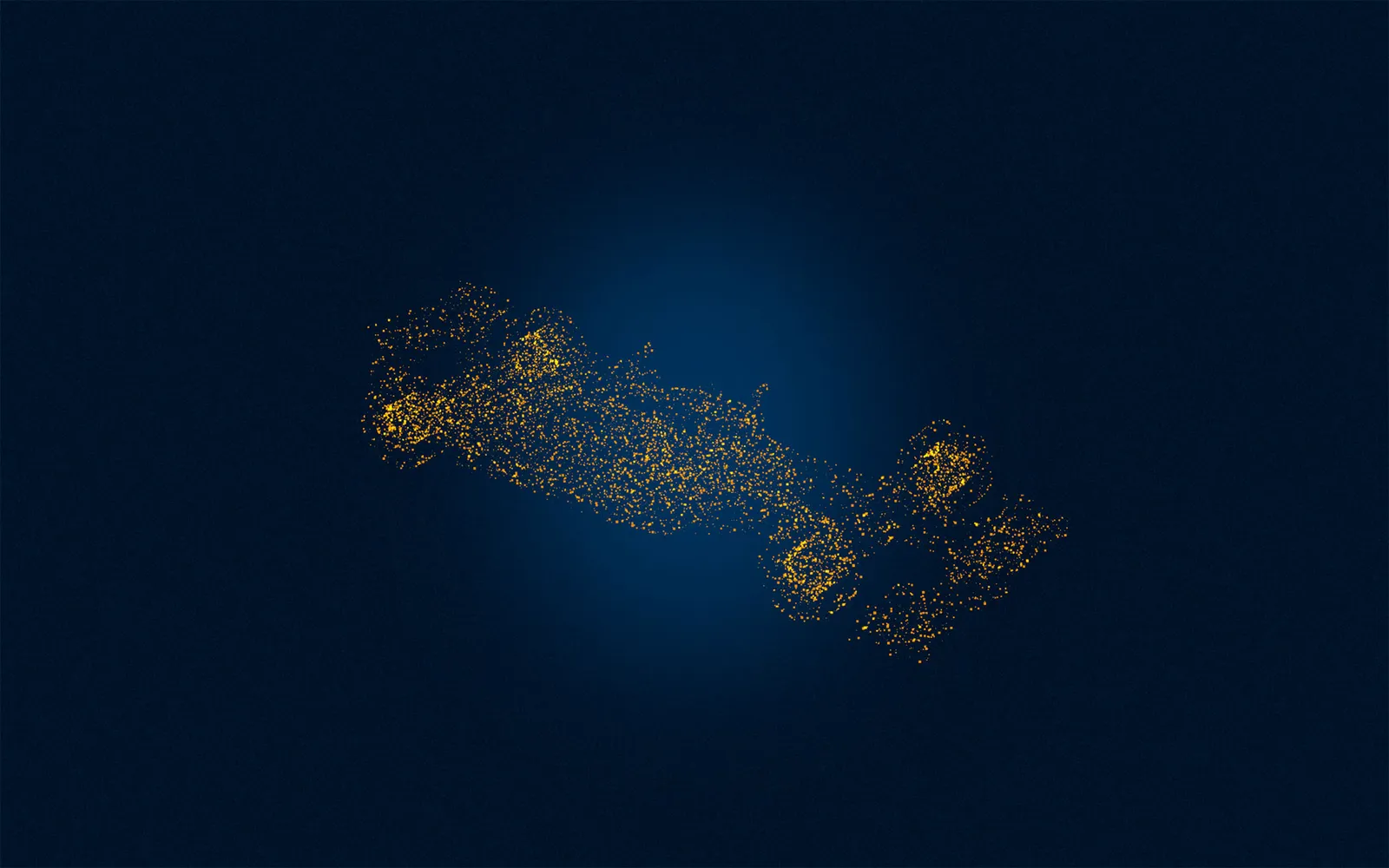
For example, on the redesign of the Dallara Automotive corporate website (and the websites for the Stradale and Academy divisions), I supported the front-end developer on the most interactive components: a 3D particle system, non-linear galleries, and other interface elements.
Focused contributions on a project with a powerful name and refined aesthetics.
Finally, the site you're browsing: I designed and built it in my spare time, from the visual identity to the code. Here every visual element has a meaning before it has an effect: the cells evoke pixels and the flow of data, colors follow a precise logic and the illustrations tell the phases of my method. It was also a testing ground for GSAP, custom canvas animations, page transitions in Vue.js and Web Workers, which keep scrolling smooth even while everything is moving. All without sacrificing accessibility: a single click turns off animations on the site or increases the contrast.
Interested in a similar project? Get in touch
Platforms for contests and events
Over the past few years, I have built several platforms for contests and promotional initiatives from scratch, managing the entire lifecycle: from client consultations to user flows and mockups, all the way to the live production platform. These are projects where I held full ownership, covering everything from the participant experience to the actual implementation.
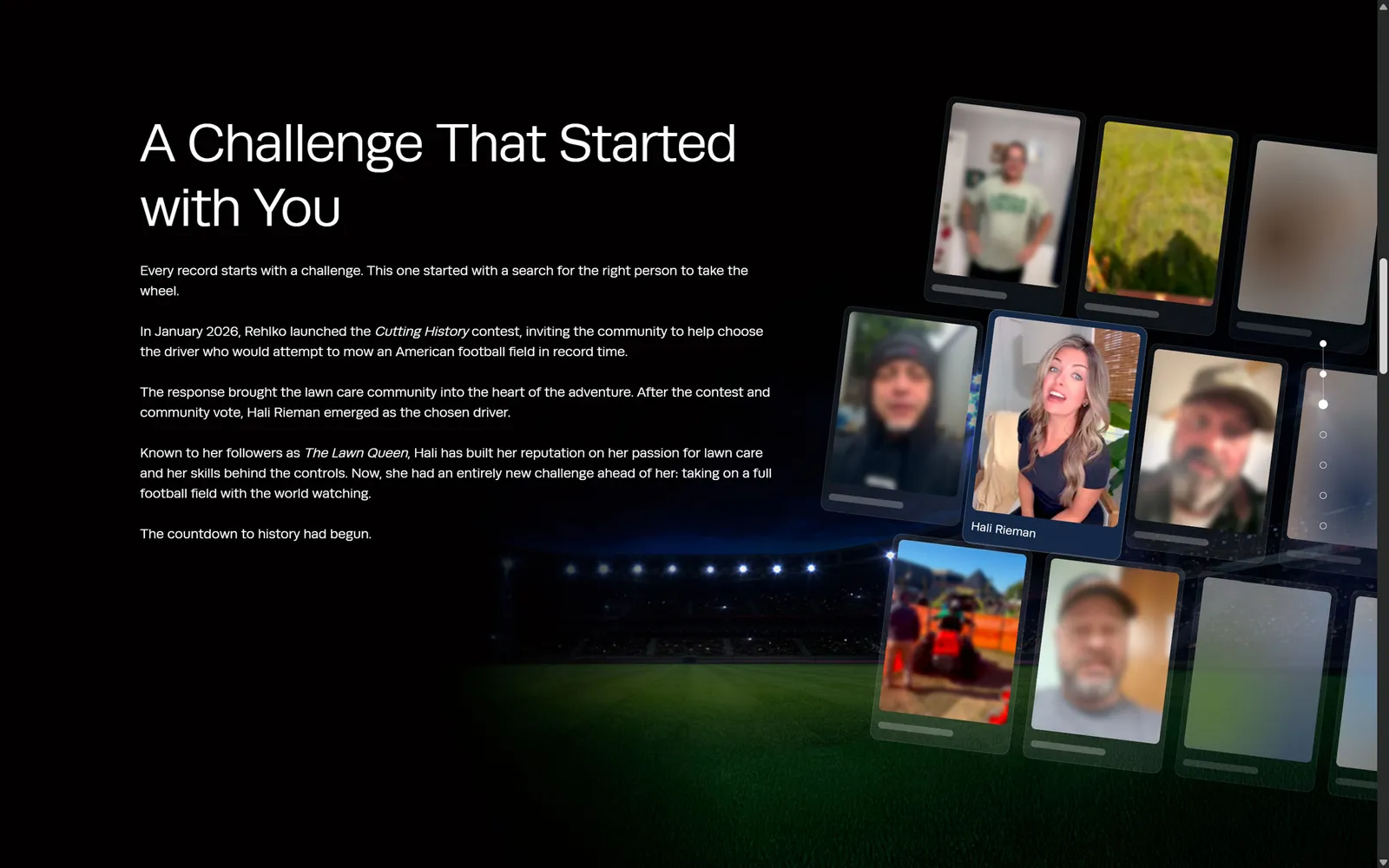
A Guinness World Record. For an international engine manufacturer — with whom I have collaborated via Pindarica since 2021 — I designed and developed the platform for a contest linked to a world record attempt. I mapped out the participant journey, from application via introductory video to public voting, while behind the scenes, the stages progressed automatically on scheduled dates, leading up to the announcement of the selected driver. The record was successfully broken in 2026.
A dual-track celebratory contest. For the same client, marking a major anniversary, I devised a contest featuring two distinct experiences for two different audiences: employees uploaded photos and customized them on the fly with the anniversary logo before voting on their colleagues' entries, while distributors participated via purchase orders and a final prize draw. I handled the workflow (defined in consultation with legal advisors), the mockups, and the entire system: the upload interface with real-time logo placement, data collection, phase management, voting, the random draw, and transactional emails.
A photo contest. This, too, featured a voting mechanism and a series of consecutive stages and transactional communications, culminating in the selection of a winner.
Added to these is a smaller but significant initiative: a prize draw mechanism, with a verification panel designed for a notary and validated by a third-party expert to guarantee the fairness of the process.
Interested in a similar project? Get in touch
Web apps and custom systems
Both as a freelancer and during my time at Antherica, I learned to shoulder the responsibility for an entire application — from the interface to the database — and I subsequently brought this approach to Pindarica.
One of the first projects was a mobile tennis ranking system that I developed almost entirely on my own: a web portal where players issue challenges and enter results (confirmed by their opponent), with the rankings updating automatically. It includes email and SMS notifications, as well as an admin panel allowing clubs to manage registrations, suspensions, and special cases. It is a comprehensive product, covering everything from UX to cron jobs.
Also at Antherica I worked on custom applications of a very diverse nature: e-learning platforms, multi-brand e-commerce with sales agents, hybrid apps for Android and iOS based on Cordova and Angular.
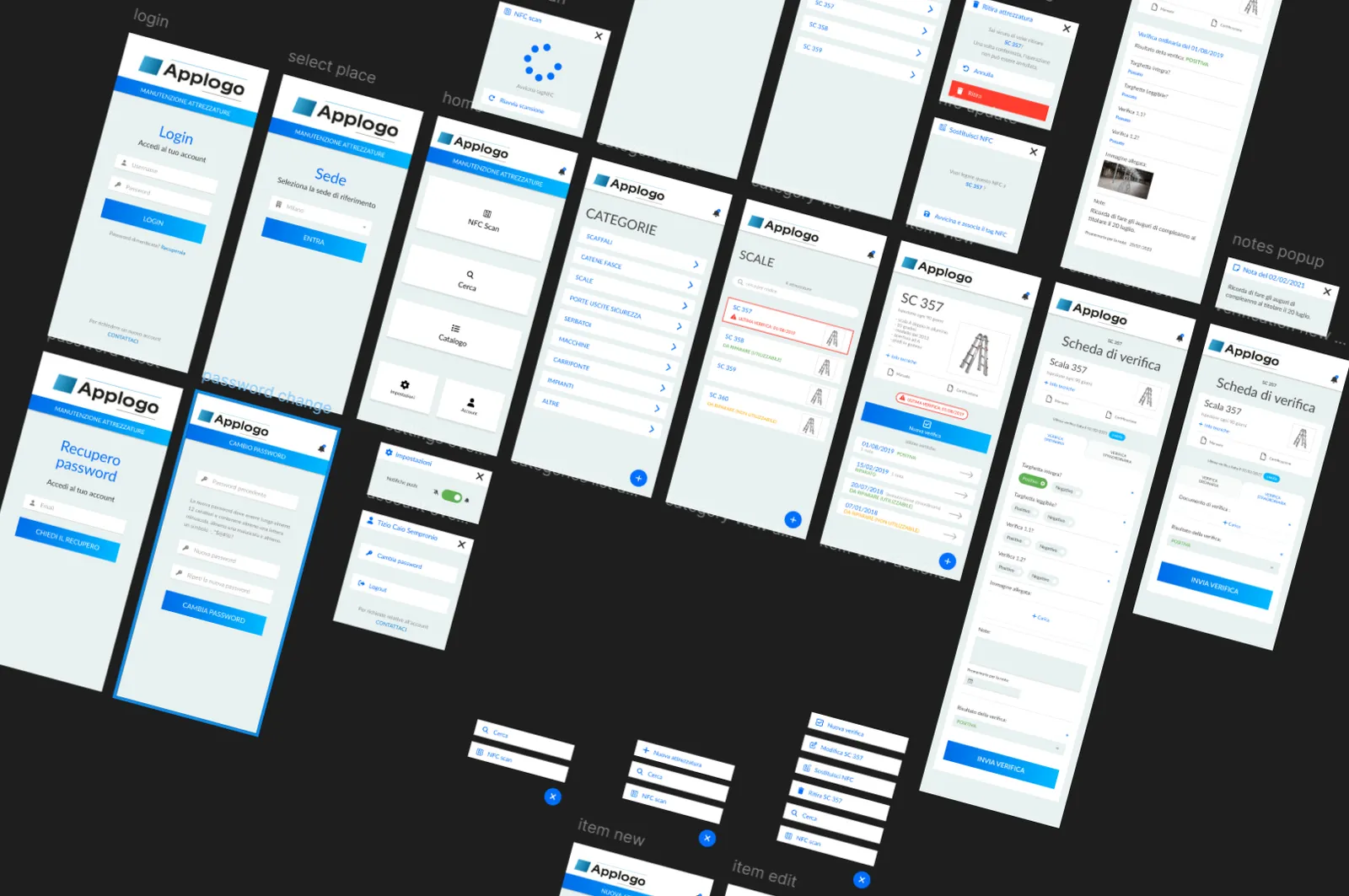
At Pindarica, I subsequently worked on larger-scale projects. The most significant was a scheduled maintenance system for a client that supplies and manages generator sets. I co-designed the maintenance technician's experience for the hybrid app — which was then developed by other colleagues — where the user scans the system's NFC tag, completes a sequence of checklist questions specific to that type of equipment, and signs off on the job via touchscreen signature. Powering this is a Laravel application I built, featuring a centralized database and APIs for the app; the administration team receives details of every job instantly (or upon the technician's device reconnecting to the network) — including information, images, and the signature — and uses the system to manage schedules, inventory, and user accounts.
Finally, I stay up to date by experimenting with new tech stacks in my spare time, later applying them to real-world projects. This was the case with Vue.js + Nuxt, GSAP, and Web Workers: I explored them in depth on my personal site and subsequently used them at Pindarica to build a suite of internal ERP tools featuring time tracking, hourly package management, invoice inventory, and margin calculation by project, client, and department.
Interested in a similar project? Get in touch
E-commerce and system integration
Much of the less visible, but more technical, work is getting systems to talk to each other.
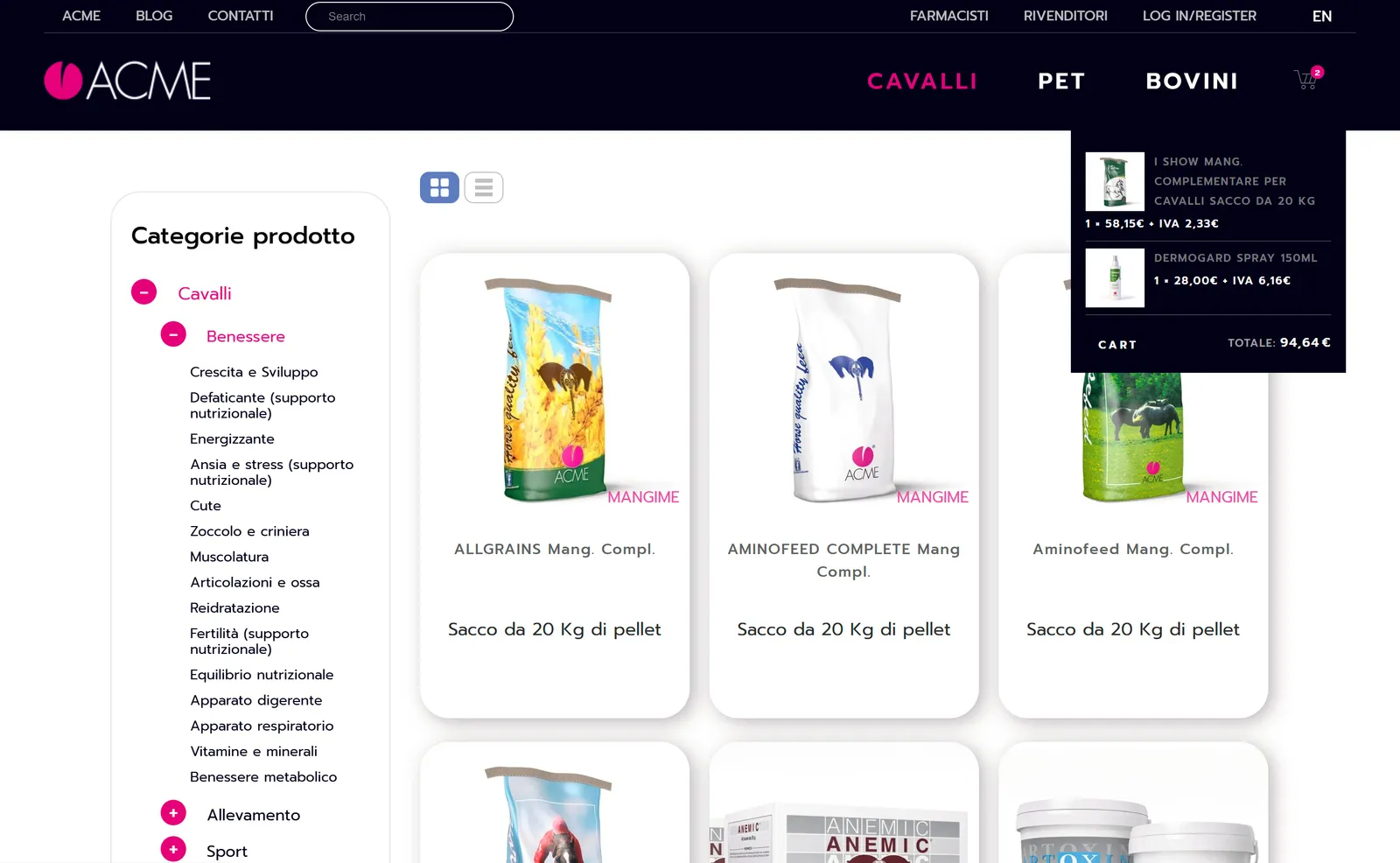
Using WooCommerce as a foundation, I have built sites with custom integrations for external management systems, handling the import/export of products, stock levels, price lists, users, and orders. On the user side, this data powers filtering systems designed to help users navigate even complex catalogs.
When the management system didn't offer out-of-the-box integration with WooCommerce — the norm rather than the exception — I built ad-hoc connectors to bridge the gap.
Interested in a similar project? Get in touch
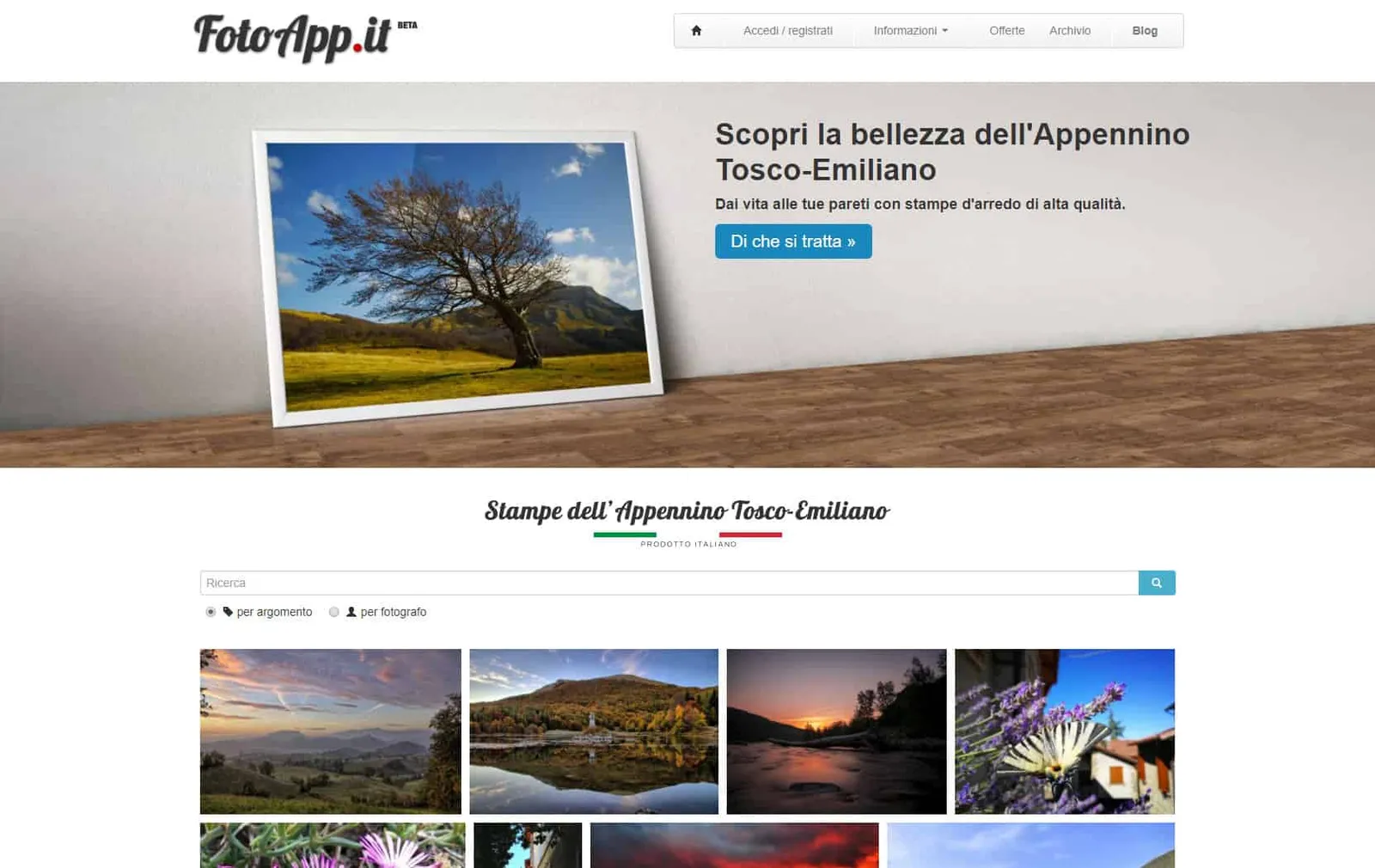
The origins: first freelance projects
This is where it all began, and it already embodied what still defines me today: designing and building with attention to people. Here are a couple of projects that illustrate this well.
FotoApp.it
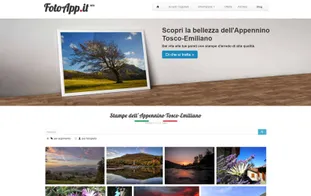
A community for photography enthusiasts in the Tuscan-Emilian Apennines, where they can share and even sell their photos. I designed and built it in 2013 with a friend and colleague, both back-end and front-end, using the CakePHP framework (MVC architecture). The clean and fully responsive interface was based on Bootstrap with extensive custom additions, most notably the expandable panel grid on the homepage. In addition to the code, we also worked on community development and sustainability. The project ended in 2019 with the closure of its operations.
Project details »Latteria San Giorgio
An e-commerce site for a dairy in the Reggio Emilia Apennines, based on WordPress with a custom theme and significant customizations — including a plugin for calculating shipping costs. But the work went beyond the coding: starting by listening to the members' needs, we built web and print communications around the Prodotto di Montagna brand, opened social media channels, and helped the client identify their target audience. The result: online sales potential far exceeded expectations, which then became a stable share of their revenue.
Project details »Interested in a similar project? Get in touch
Training and experimentation: IED Florence
Two-year Professional Training Program in Web Design - 110 cum laude
An intensive and highly practical training program, taught by practicing professionals. Two years during which I combined study and work, allowing me to explore diverse disciplines and incorporate them into my design approach.
Adidas Video Hacking (thesis project)
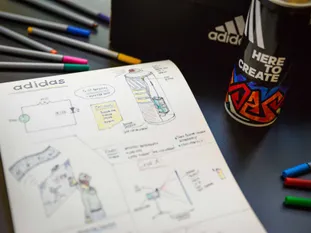
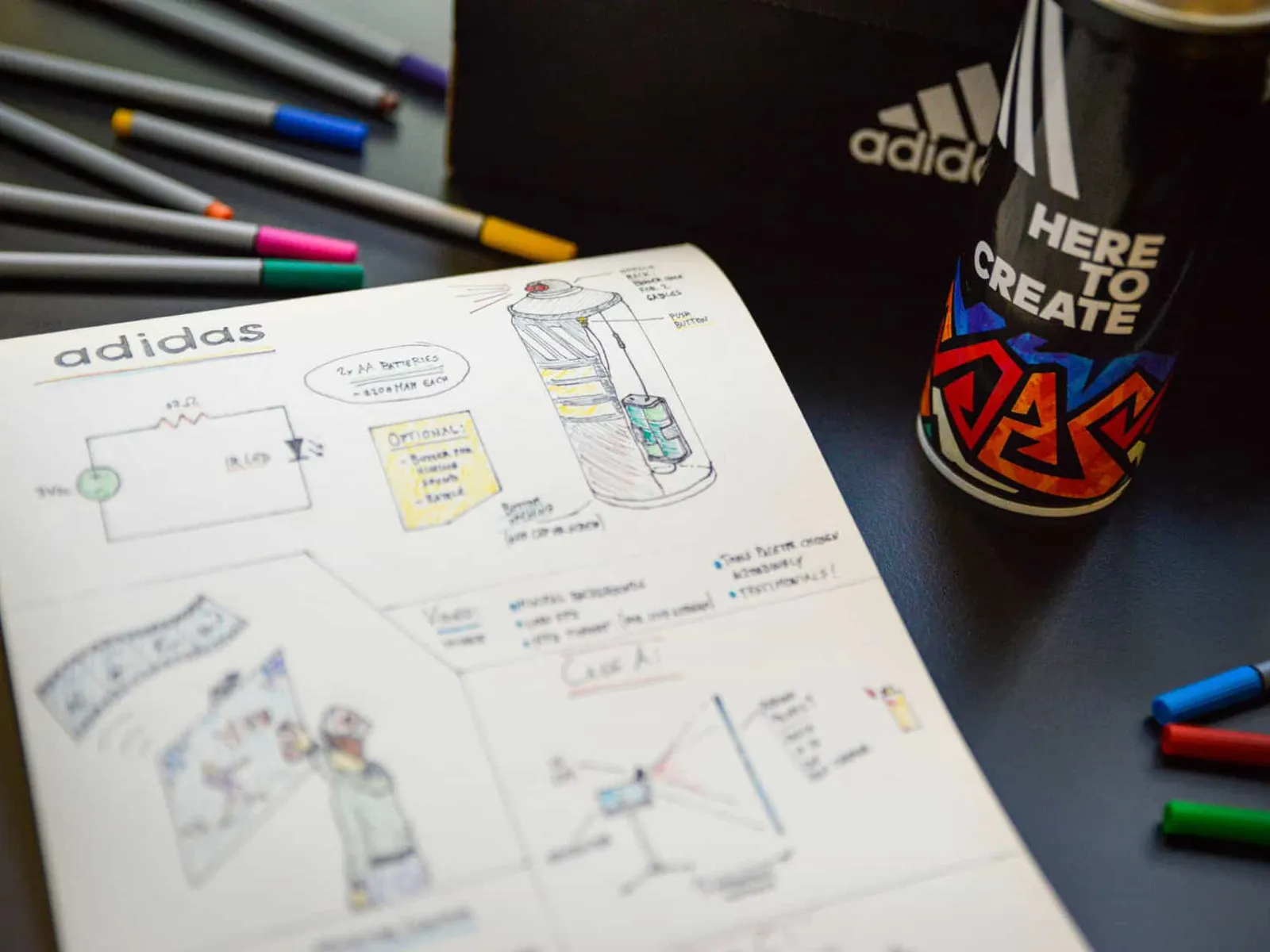
The 2018 proposal came directly from Adidas. Together with my group — of which I was the team leader — I designed and prototyped an experience that allowed the audience to customize frames from a promotional video, bringing a collective work to life. And not just online: we paired the portal with an interactive physical installation, a fake spray can (actually an infrared pointer) to draw on the frames as if they were a wall. From gathering the brief to the UX, from front-end programming to DIY hardware assembly, up to the final pitch presented in English to an Adidas delegation visiting Florence. The experience was worth a full mark.
Project details »Other courses and projects
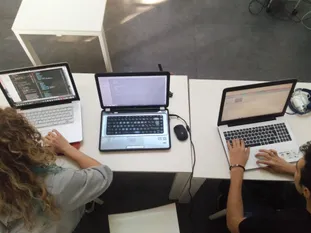
Alongside my thesis, here are some of the projects that best illustrate my curiosity:
- Theremin Terraforming - Generative design in Processing: A real-time visualization of a theremin's sound wave, inspired by the cover of Unknown Pleasures.
- WebGL and 3D Graphics - Interactive scenes in ThreeJS, from shader theory to navigable scenes.
- Computer vision - motion sensing and object detection, the basis of the technical part of the thesis.
- Graphic design and typography - grids, design history, and the creation of a pixel font and its specimen.
Interested in a similar project? Get in touch
Send me a message
I'm always open to suggestions, collaborations, or ideas for new projects!
I am currently employed at Pindarica Società Benefit, where we deal with digital communication.